

In the realm of engineering, innovation often arises at the intersection of creativity and technology. One fascinating example of this is the application of vacuum viewports, which have become increasingly crucial across various fields. Originally designed to provide a direct line of sight into sealed vacuum settings, these specialized transparent barriers enable engineers to observe and interact with activities occurring in rigorous conditions. As sectors evolve and push the limits of what is feasible, the roles of vacuum viewports are growing, paving the way for trailblazing advancements.
From particle physics experiments to aerospace applications, vacuum viewports play a pivotal role in ensuring security and accuracy. They allow for real-time monitoring and evaluation without compromising the quality of the vacuum environment. As we delve into the multitude of creative uses for these extraordinary engineering components, it becomes apparent that vacuum viewports are not merely inactive installations; they are essential tools that facilitate innovation in unprecedented manners.
Cutting-edge Applications of Vacuum Windows
Vacuum viewports have found distinct uses in various engineering fields, promoting creativity and enhancing functionality. In lab environments, these windows allow scientists to observe reactions in high-vacuum environments without jeopardizing data integrity. For example, in materials science, researchers utilize vacuum viewports to study thin coatings and coatings under high conditions, allowing them to gain insights into material behaviors that are unattainable in standard atmospheric settings.
In the aerospace industry, vacuum viewports play a vital role in the testing and development of spacecraft components. Engineers use these windows to simulate the vacuum of space, allowing for comprehensive evaluations of materials and systems designed for challenging extraterrestrial environments. This application ensures that technology can tolerate the demands of space travel, thereby improving safety and performance during space missions.
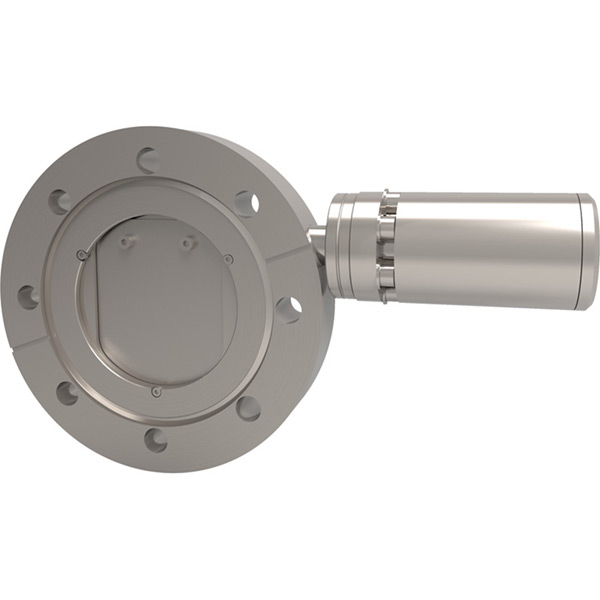
Another creative use of vacuum viewports is in the realm of high-energy physics experiments, such as those conducted in particle accelerators. These viewports provide physicists with the ability to monitor the interactions of particles at a small level while keeping a vacuum, which is essential for exact measurements. This function improves the understanding of basic physical phenomena and promotes advancements in technology that result from innovative investigations.
Development Factors for Sealed Windows
When creating vacuum viewports, strength and component selection are critical. The materials must withstand both the outside atmospheric pressure and any likely internal stresses. Common options include glass glass, quartz, and tailored plastics that can provide the necessary clarity while remaining physically sound. Additionally, the decision of coatings can enhance longevity and visibility, making it important to balance optical performance with mechanical resilience.
Another important consideration is the dimensions and shape of the viewport. Larger viewports may enhance better visibility but can also affect structural integrity. Designers must evaluate the end-use application; for case, a viewport used in a high-energy physics experiment will have varying requirements than one used for a substance testing chamber. The structure design should uniformly distribute stress to avoid fragile points that could lead to breakdown.
Sealing and integration with the vacuum system are key in the design process. Proper sealing is necessary to maintain the vacuum and prevent leaks, which could damage the entire system. The interface between the viewport and the chamber must be carefully designed, ensuring compatibility with the vacuum pumps and other components. Innovative sealing technologies such as O-rings or welded seams can enhance trustworthiness, while also allowing for simpler maintenance and replacement of viewports when required.
Future Trends in Vacuum Viewport Technology
Since technology keeps to advance, the outlook of vacuum viewport technology offers substantial innovation and enhancements. One key trend is the inclusion of smart materials and sensors inside vacuum viewports. These advancements seek to enhance transparency and durability while enabling for real-time tracking of structural integrity and performance under various circumstances. By embedding smart technology, engineers can acquire crucial data on stress and thermal fluctuations, leading to more secure and optimized designs.
Another exciting trend is the possibility for greater personalization in vacuum viewports . Manufacturers are researching new methods for modifying the shape and size of viewports to fulfill specific engineering specifications. This personalization extends to the materials used, with researchers examining lightweight, high-strength composites that can survive extreme environments. These advancements not only enlarge the range of applications for vacuum viewports but also enhance to the overall efficiency and cost-effectiveness of engineering projects.
Lastly, the exploration of new applications for vacuum viewports is positioned to expand considerably. Industries such as aerospace, medical, and research are uncovering innovative uses, ranging from high-performance optical systems to containment units for sensitive tests. As the demand for accuracy and consistency grows in these sectors, vacuum viewports will take a crucial role in improving functionality and performance. This trend points to a promising future for vacuum viewport technology as it becomes increasingly integral to cutting-edge engineering solutions.